.svg)




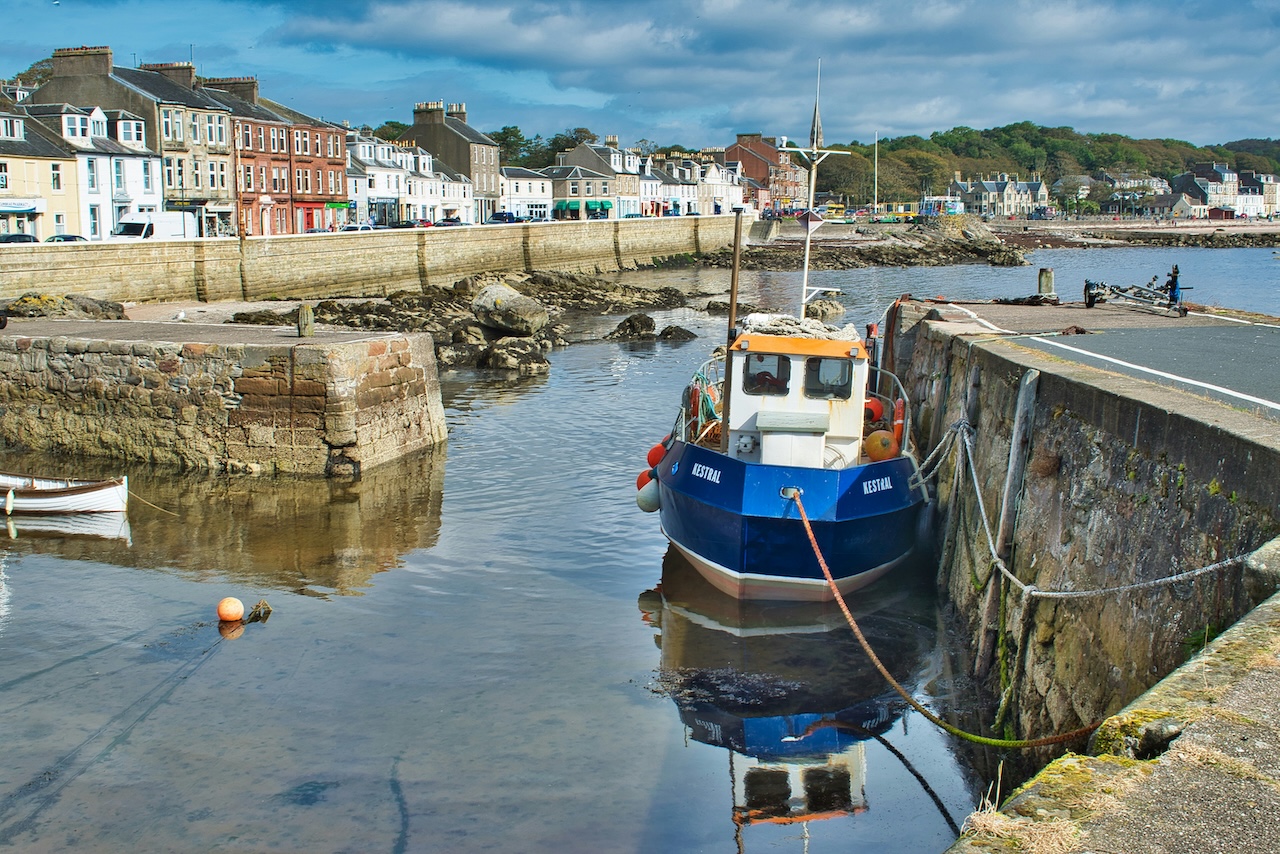



Scotland's coastline is among the most varied and rewarding in Europe, running for nearly eight thousand miles if every inlet and sea loch is measured. The North Coast 500 has done an admirable job of bringing visitors to the northern Highlands, but it has also concentrated attention on a relatively narrow circuit. The villages below are, by contrast, places where you can arrive at a harbour-side table for lunch and discover that the lobster was landed that morning — and that you are the only table booked.
These are not undiscovered in any absolute sense. But they are places where travel still feels purposeful, where the effort of getting there becomes part of the experience, and where the rewards — dramatic scenery, outstanding seafood, genuine hospitality — arrive in direct proportion to the journey. For 30+ travellers who have done the Highland show-stoppers and want to go deeper, these villages are the natural next chapter.
Choosing the Right Stretch of Scottish Coast
Scotland's coast divides naturally into several distinct characters. The west coast and the Hebrides offer Atlantic exposure, soft green islands, and sea lochs of extraordinary depth and colour. The light on a clear June evening over the Minch — that stretch of water between the mainland and the Outer Hebrides — is a physical phenomenon: low, warm, long and seemingly inexhaustible. The east coast, from Aberdeenshire south to the Borders, is more austere — cliff-backed, cleaner-lined, with working harbours that have changed relatively little in a century. The north coast, now well-documented via the NC500, combines both influences.
For a first coastal exploration beyond the familiar itineraries, the west and the far east offer the most contrast. The west rewards those who are prepared to travel slowly; roads are narrow and distances are deceptive on a map. The east is more straightforwardly accessible by car from Edinburgh or Aberdeen and lends itself to a tighter, more structured itinerary. Both repay the decision to leave behind the main routes — and to use a good OS Landranger map rather than relying entirely on a sat-nav.
Seven Villages That Reward a Visit
Plockton, on the shore of Loch Carron in Wester Ross, is probably the most photogenic village in Scotland — a judgement that does not diminish its appeal, because the setting genuinely merits it. Thatched cottages, palm trees (a product of the Gulf Stream microclimate that keeps winters unusually mild), and boats reflected in still water combine in a scene that reads as improbably perfect. The Plockton Inn serves langoustines that are as good as any in Scotland. The village is best reached via the Kyle of Lochalsh road; the Jacobite Steam Train route from Inverness also passes close by, and the journey from Inverness to Kyle is one of the finest railway experiences in Britain.
Tobermory, on the Isle of Mull, is immediately recognisable from its painted harbourfront — a row of brightly coloured buildings above the water that has been a benchmark image of Scottish island life for decades. Beyond the harbour, Mull rewards a longer stay than the day-trip crowds allow. CalMac ferries run from Oban, and the crossing is straightforward. The island's distillery, wildlife (Mull has one of the highest densities of white-tailed eagles in Scotland), the beaches of the Ross of Mull and the approach to Iona make this a natural base for an island week. The west coast of Mull, seen from the road between Bunessan and Fionnphort, is one of the most impressive coastal drives in the Hebrides.
Cromarty sits on the Black Isle peninsula in Ross-shire, easily reached from Inverness. It is an unusually well-preserved Georgian town with a working harbour, a strong artistic community and a pair of restored eighteenth-century buildings that give the high street a character found in few Scottish towns of comparable size. The waters of the Cromarty Firth are a significant bottlenose dolphin habitat, and boat trips operate regularly in season — these are resident dolphins rather than seasonal visitors, present year-round and reliably viewable.
Portpatrick in Dumfries and Galloway anchors the Rhinns of Galloway on the Solway coast. Once the main ferry departure point for Ireland, it retains a working harbour with a tight ring of whitewashed buildings and some of the best sunsets on the west coast of southern Scotland. The Southern Upland Way, one of Scotland's great long-distance walking routes, begins here — though a cliff-walk of just a few miles north or south along the coast offers equally rewarding views without the multi-day commitment.
St Abbs on the Berwickshire coast is a National Nature Reserve village built around a small, photogenic harbour. The cliffs above the village are among the most dramatic in southern Scotland and support significant seabird colonies — kittiwakes, razorbills and puffins nest here in spring and early summer. Divers come for the St Abbs Head marine reserve, one of the best cold-water diving sites in Britain; walkers come for the coastal path south towards Coldingham Bay and the wide views of the North Sea.
Pennan in Aberdeenshire sits in a notch cut into the cliffs of the Moray Firth, reachable only by a vertiginous single-track road. It is one of the smallest and most dramatically situated villages in Scotland, a place that rewards the effort of arrival with a frontage of fishermen's cottages immediately above the sea wall and a silence — save the sound of the water — that is increasingly rare.
Ullapool is the largest settlement on this list and the most practical as a base for the surrounding Assynt and Coigach peninsula. Its relationship with the sea is direct: CalMac ferries depart for the Outer Hebrides, fishing boats unload on the pier throughout the week, and the town's restaurants and fish-and-chip shops serve the resulting catch with minimal pretension and maximum freshness. The landscape immediately surrounding Ullapool — Stac Pollaidh, Suilven, the Inverpolly nature reserve — is among the most dramatic in Britain.
Where to Stay: Character Accommodation on the Coast
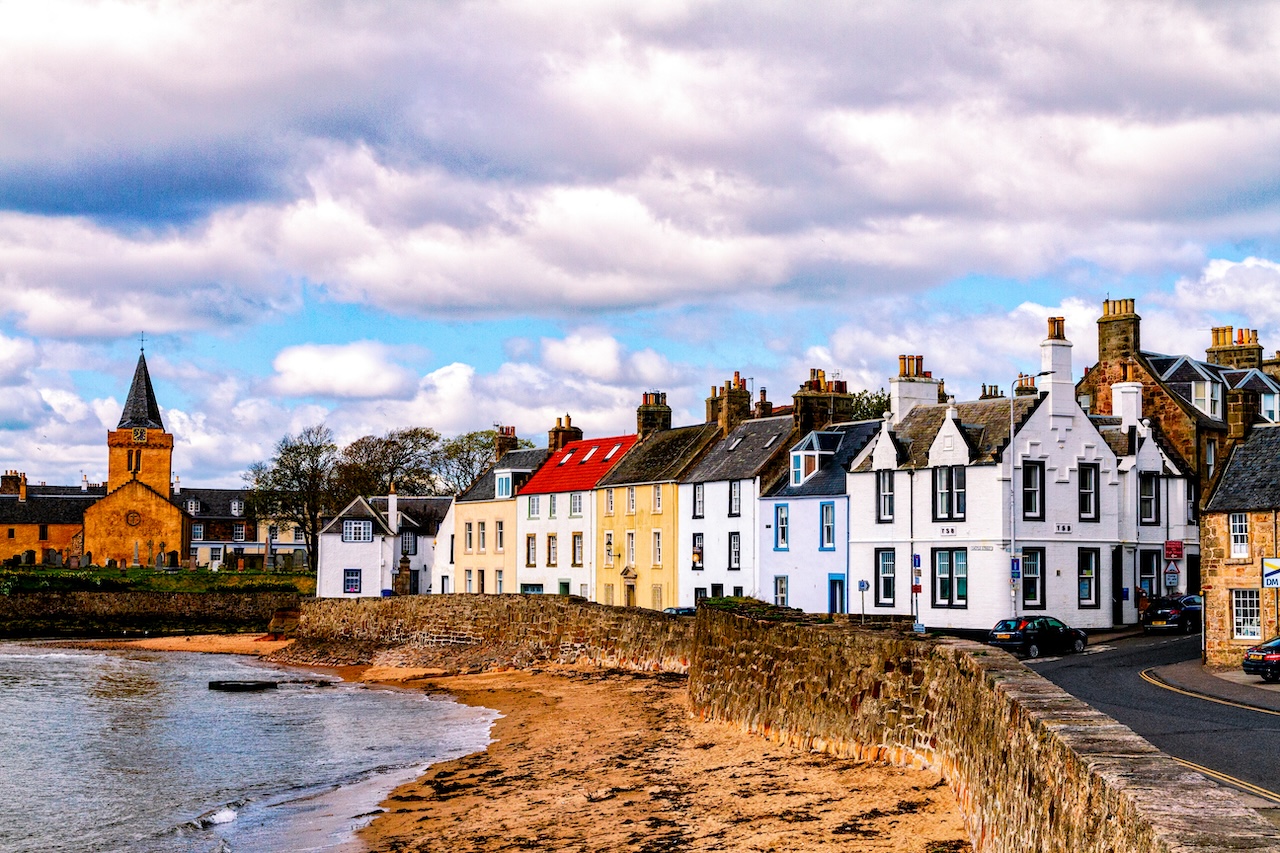
Scotland's coastal villages have seen a marked improvement in accommodation quality over the past decade. The most reliable format remains the independently owned inn with rooms — Plockton, Ullapool and Cromarty all have properties at this level — where the combination of local seafood, whisky lists drawn from the surrounding distilleries and individual character makes a three-night stay more rewarding than any chain equivalent.
For island stays, self-catering is the most practical and often the most enjoyable format. Mull, Arran and the Outer Hebrides all have well-maintained cottages available through specialist agencies. Booking well in advance is essential for peak season; May and September offer the best combination of light, weather and availability — and the midges that define August on the west coast are considerably less assertive.
How to Combine Villages Into a Memorable Road Trip
A west-coast road trip using Inverness or Glasgow as a starting point, looping via Ullapool, Plockton and Tobermory (with a CalMac crossing to Mull from Lochaline or Kilchoan) can be completed comfortably in seven to nine nights and covers an extraordinary range of landscapes and experiences. The section of road between Ullapool and Lochinver, via Drumrunie, is among the most spectacular in Scotland and introduces the Torridonian sandstone landscape that defines the far north-west.
For the east coast, a linear route from Aberdeen south through Pennan, Fraserburgh and Stonehaven before cutting inland to Edinburgh takes four to five days and combines some of Scotland's most distinctive coastal scenery with two of its finest cities. Stonehaven, with its outdoor art deco lido and harbour town character, makes an excellent penultimate stop before Edinburgh.
Both routes benefit from unhurried driving, a good OS map and the willingness to follow a coastal road beyond the point where a sat-nav would suggest turning back. Scotland consistently rewards that instinct.
For ferry planning across the western islands, Caledonian MacBrayne's route guide is the essential resource — timetables, booking and inter-island connection information are all held here, and early booking for car spaces on the more popular summer crossings is strongly advised. The VisitScotland coastal and islands guide provides comprehensive regional inspiration and accommodation suggestions across the full length of Scotland's extraordinary coast.

.jpg)



.svg)