.svg)







Something significant has shifted in the way discerning travellers approach their accommodation. The international five-star chain — with its reassuring standardisation, its infinity pool and its identical executive floor minibar — no longer occupies the aspirational top of the market it once did. In its place, a new category of property has emerged across Europe: small, independently conceived, architecturally considered hotels where every detail reflects a specific place and a specific point of view.
These are not boutique hotels in the diluted sense that mid-market brands have appropriated the term. They are properties where the owners are often present, where the design is a genuine expression of creative intent, and where the local community — its food, its culture, its producers — shapes the guest experience in ways that a global brand's operating manual cannot replicate. For 30+ travellers who have outgrown the predictability of the chain five-star, these properties represent what the luxury market is actually moving toward.
Why Boutique Outperforms Brand in Today's Luxury Market
The shift away from international chains is partly driven by travellers who have simply had enough of predictability. A room in a globally branded five-star hotel in Lisbon is a well-executed room, but it could as easily be in Singapore or Chicago. The proportions, the palette, the pillow menu — all reassuring, none of it particular to anywhere.
The best independent properties in Europe take the opposite position. They begin with a place — a nineteenth-century palazzo in Sicily, a converted hunting lodge in the Austrian Tyrol, a pair of medieval tower houses in a Provençal village — and build an experience that could not exist anywhere else. This specificity is, increasingly, what luxury travellers are prepared to pay for. The question they are asking is no longer "what five-star guarantee do I get?" but "what will I understand about this place that I couldn't learn from anywhere else?"
There is also a compelling service dimension. A twenty-room property where the general manager has been in post for a decade, where the sommelier knows the small producers across three surrounding wine regions, and where the kitchen team has developed a supply network of local farms over years offers a quality of hospitality that scale actively prevents. The best boutique hotels have a warmth and attentiveness that is genuinely difficult to systematise — because it depends on individuals who care deeply about the place, not on process manuals calibrated to brand standards. Guests notice the difference quickly, and it is the primary reason the most successful independent properties in Europe maintain occupancy rates that the chains frequently envy.
The Regions Leading the New Wave
Southern Europe has produced the most celebrated examples. Portugal's Alentejo region — rolling plains, cork forests, white-washed villages and a landscape that has remained essentially unchanged for centuries — has seen a cluster of exceptional rural properties emerge over the past decade, combining serious architecture with farming-estate credentials and kitchen teams that have elevated Portuguese country cooking to a standard worthy of international attention. The cork oak forests are themselves a sustainable crop, and several Alentejo properties have built their environmental narrative around the landscape they sit within.
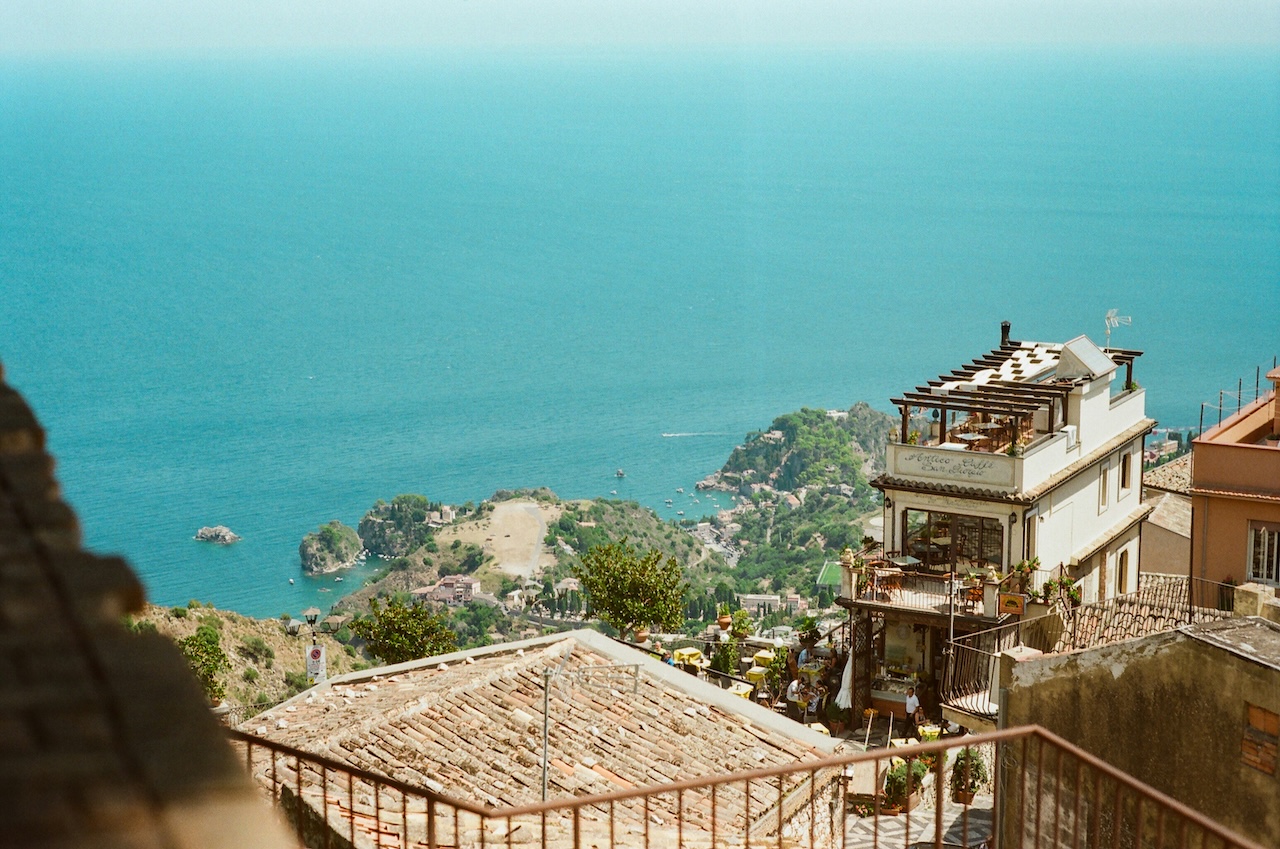
Italy continues to generate outstanding independent properties, particularly in Sicily and Puglia, where historic structures — masserie, castelli, convents and baglio farmhouses — are being converted with remarkable design sensitivity. The south of Italy offers a combination of dramatic landscapes, ancient culture and relative value that the north and Tuscany cannot easily match for those who already know the canonical itineraries. A restored Sicilian baroque palazzo in the Val di Noto, or a converted trabucco fishing structure on the Gargano coast, offers something that five-star Florentine hotels cannot.
The Alpine regions of Austria and Switzerland have seen a generation of family-run mountain hotels reinvented by younger members of the owning families — proprietors who have worked internationally, developed a design sensibility and returned with ideas about food, sustainability and guest experience that have transformed the format without losing the warmth that defines the best Alpenhotel tradition. These properties combine genuine hospitality with a contemporary sensibility that appeals to travellers who want exceptional comfort and beauty without self-conscious grandeur.
The Balkans and Eastern Mediterranean — Slovenia, Croatia, Greece and increasingly North Macedonia and Albania — are home to an emerging wave of smaller properties that offer genuine discovery. Coastal Croatia has attracted considerable international investment; less well-known is the quality of properties now appearing in Slovenia's Soča Valley and on the less-visited Greek islands of the Ionian and Dodecanese groups.
Six Properties Setting the Benchmark
Naming specific properties with permanence is always a risk in this category — ownership changes, chefs move, hotels evolve — but the following types of property consistently represent what independent European luxury does best.
A converted vineyard estate in Alentejo with fifteen suites, a wine cave for tastings and a kitchen sourcing from its own market garden represents the Portuguese template at its finest. In Sicily, a nineteenth-century palazzo in a hilltown with eight rooms, hand-painted Sicilian tile floors and a menu built around the island's Arab-Norman culinary heritage is a category apart from anything a chain could produce. An Austrian lakeside property where the family who built it in the early twentieth century are still present across three generations — with a sauna culture rooted in local Alpine tradition and a breakfast sourced from neighbouring farms — exemplifies the central European approach. A Greek island property of twelve rooms with a direct-access swimming cove, hand-restored stonework and a kitchen using the island's fishing catch daily is another template that chains cannot replicate.
The common thread is integrity of concept. These properties know precisely what they are, have made deliberate decisions about what they will not offer as much as what they will, and deliver their specific proposition with complete conviction.
Design Hotels' curated portfolio and Small Luxury Hotels of the World are the most reliable independent directories for identifying and researching properties of this calibre across Europe and beyond. Both collections apply editorial and quality standards that distinguish them from aggregator platforms, and both publish useful editorial content about their member properties that supplements the booking information.
How to Find and Book Independent Luxury Hotels
The challenge with genuinely independent properties is visibility. They rarely appear high in generic search results and are often absent from the major booking platforms — either by choice or because the commission structures do not suit a property at this scale. Finding them requires deliberate research rather than passive discovery.
The most reliable discovery routes are specialist curated hotel collections (Design Hotels and SLH are both well-regarded and apply genuine selection criteria), editorially driven travel publications with credible hotel coverage, and word-of-mouth from travellers whose taste you trust. Travel agents who specialise in independent and boutique hotel bookings remain highly effective — they have often visited the properties personally, carry direct relationships with management, and can translate those relationships into upgraded rooms, specific table reservations and a quality of pre-arrival communication that sets the tone for the entire stay.
Direct booking with the hotel is almost always preferable once you have identified where you want to stay. It allows you to communicate specific requests, discuss room allocation in detail — at a small property, which room you occupy matters enormously — and, in many cases, secure a rate equivalent to the best available online, without intermediary fees. For a property of twenty rooms or fewer, that direct conversation is also simply the appropriate way to engage.
The independent boutique hotel asks more of the traveller than a chain — more research, more planning, occasionally more patience with logistics that a global reservations system would handle automatically. It repays that investment with experiences that are, in the best cases, genuinely irreplaceable: accommodation that is inseparable from the place it occupies and the people who built it.



.svg)