.svg)




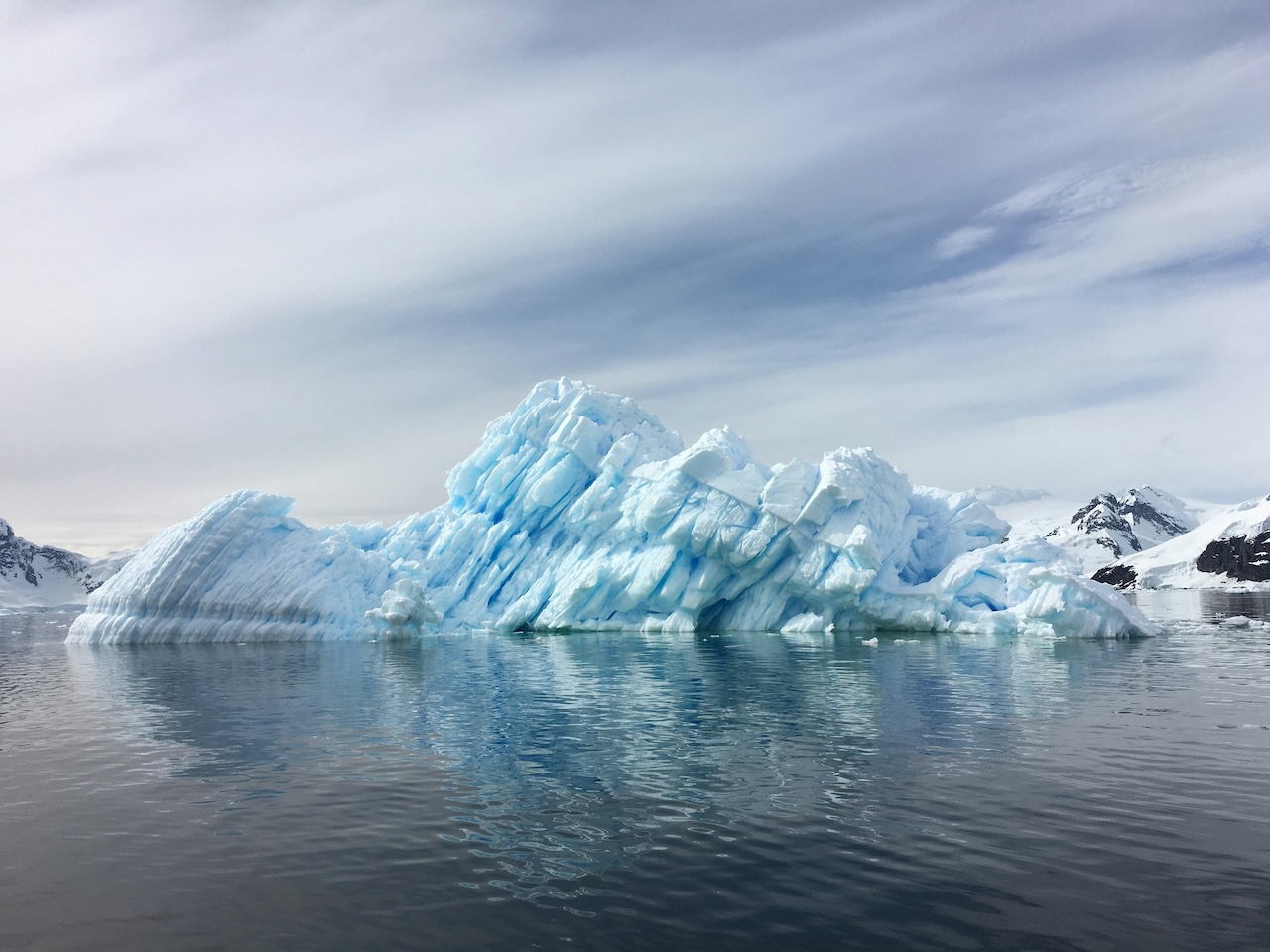



There is a category of travel experience that resists dilution by description. The silence of the Antarctic morning, broken only by the creak of shifting ice and the sudden exhalation of a humpback whale surfacing a hundred metres from the Zodiac — no amount of photography or prose entirely prepares you for it. Polar expedition cruising offers moments of this order with a frequency that no other travel format matches. It is, for many of those who make the journey, the most significant travel experience of their lives.
It is also a travel experience that requires considered preparation. Understanding the difference between the Arctic and Antarctic, knowing what expedition ships offer that standard cruise vessels do not, and choosing an operator with genuine expedition credentials rather than merely expedition marketing — these are all essential steps in planning a voyage that delivers on its considerable promise.
Arctic vs Antarctic: Which Voyage Is Right for You
The two polar regions are fundamentally different destinations, and the distinction between them shapes every subsequent planning decision.
Antarctica is the more remote and, for most travellers, the more dramatic. It is a continent of extreme cold, extraordinary light and a silence that is qualitatively different from anything available in the inhabited world. Wildlife — penguins, seals, whales — is abundant and entirely unafraid of human presence, because in evolutionary terms the continent's brief history of human visitation has not had time to teach the local fauna to fear us. The scenery, of glaciers calving into bays of deep blue, of tabular icebergs the size of city blocks, of mountains that no one has ever climbed, is genuinely incomparable. Expedition ships depart from Ushuaia in Tierra del Fuego, crossing the Drake Passage — historically among the world's most challenging stretches of open ocean — before entering Antarctic waters. The crossing takes approximately two days each way in reasonable conditions, and is itself a remarkable maritime experience. A minimum of ten to twelve days is needed to reach the Peninsula and return; longer voyages to South Georgia, the Falkland Islands and beyond require three weeks or more.
The Arctic encompasses the Norwegian archipelago of Svalbard, the coasts of Greenland, Iceland and northern Scandinavia, and depending on the itinerary, the northern coast of Canada and Russia. Arctic expeditions are generally more accessible for UK travellers — shorter crossings, more varied port options, and in the case of Svalbard, reachable without any Drake Passage equivalent. Wildlife is different from Antarctica but equally spectacular: polar bears (Svalbard has one of the densest populations in the world), walruses, Arctic foxes, narwhal in certain regions, and in Norwegian waters, orcas hunting herring in winter months. The Arctic also offers the human geography of remote indigenous communities, historic whaling and trapping stations, and in Greenland, an Inuit cultural heritage of considerable depth. The midnight sun in summer — when the sky never fully darkens — creates a surreal quality of light that photographers find endlessly compelling and that gives even a simple walk on a tundra hillside above the anchorage a particular charge.
For most UK travellers making their first polar expedition, the Antarctic Peninsula is the aspiration; Svalbard is an excellent and more logistically accessible introduction to the expedition format and the ship-based wildlife experience.
What Expedition Ships Offer That Standard Vessels Do Not
The distinguishing features of a genuine expedition ship are primarily operational rather than aesthetic, though standards of comfort and design have improved considerably across the sector.
Expedition vessels are ice-classed — built to specific hull standards that allow them to operate in proximity to pack ice without the risk of hull damage that would threaten a conventional cruise ship. They carry Zodiac inflatable landing craft in sufficient numbers to move passengers ashore in small groups, allowing access to beaches, rookeries and landing sites that have no dock infrastructure — which describes virtually every worthwhile landing site in Antarctica. The crew includes expedition leaders, naturalists, ornithologists, marine biologists, geologists and historians who lecture at sea between landings and guide ashore, providing the scientific and cultural context that transforms raw scenery into understood experience.
The ratio of expedition staff to passengers is among the most important specifications to assess when comparing operators. The best programmes deploy specialist guides in ratios that ensure Zodiac groups of eight to twelve, with a dedicated expert per boat. A group of eight in a Zodiac with an experienced Antarctic ornithologist who can identify a snow petrel in flight and explain its habitat range is categorically different from a group of twenty with a generalist guide whose primary function is safety management.
Ship size involves genuine trade-offs. Larger expedition vessels — carrying three hundred or more passengers — have superior medical facilities, better at-sea stabilisation systems and often more comprehensive lecture programmes. Smaller ships, carrying sixty to two hundred, can access landing sites that larger vessels cannot and offer a more intimate onboard community in which fellow passengers become genuine companions over a voyage of two weeks. The most established polar operators, including Hurtigruten Expeditions, maintain fleets that span both formats and can advise on which suits a specific itinerary and traveller profile.

Wildlife, Landscapes and Experiences to Anticipate
In Antarctica, the Wildlife experience is the centrepiece of every expedition. Penguin rookeries of extraordinary density — Adélie, Gentoo and Chinstrap colonies of hundreds of thousands of birds — occupy beaches that would otherwise be uninhabited; the noise, movement and smell of a large penguin colony are sensory experiences unlike anything in the temperate world. South Georgia, often included in extended itineraries, supports the largest king penguin colony on earth and elephant seal beaches where the interaction between vast male seals creates scenes of extraordinary drama. Ernest Shackleton is buried at Grytviken on South Georgia, and the visit to the whaling station ruins and his grave is an experience that combines landscape, wildlife and one of history's most compelling survival stories.
Whale watching in Antarctic waters has become one of the expedition's primary experiences. Humpback whale populations in the Southern Ocean have recovered substantially since the end of commercial whaling, and encounters with feeding groups — sometimes logging alongside the ship or breaching within camera range — are now routine rather than exceptional on well-run expeditions.
In the Arctic, the encounter with a polar bear at close range — observed from the Zodiac at a safe distance while the bear continues its business on the ice edge — is one of wildlife tourism's most memorable experiences. The International Association of Antarctica Tour Operators (IAATO) governs wildlife interaction guidelines in Antarctica, and equivalent standards apply across responsible Arctic operators, ensuring that the wildlife experiences that make these expeditions exceptional are also managed in ways that protect them.
How to Choose an Operator and What to Budget
Polar expedition cruising is one of travel's significant investments, and the variation in fare between operators reflects genuine differences in ship quality, expedition staff calibre, inclusion levels and the depth of the onshore programme. The operators consistently regarded as setting the standard are those whose vessels are purpose-built or extensively refitted for polar work, whose expedition teams include named specialists with multi-season Antarctic or Arctic experience, and whose itinerary design demonstrates genuine expedition philosophy — the flexibility to reroute around a whale feeding aggregation, to extend a landing when conditions are exceptional — rather than packaged sightseeing.
What to look for specifically: IAATO or AECO (Association of Arctic Expedition Cruise Operators) membership, which confirms adherence to internationally accepted wildlife and environmental standards; fleet ice class and vessel age; the named credentials of expedition leaders and naturalists; and the inclusion level of Zodiac operations and specialist programme within the base fare. Booking a polar voyage requires commitment typically six to eighteen months ahead; the most sought-after ships and itineraries on the most established operators fill early, and flexibility on departure date will secure better cabin grades at comparable fares.




.svg)