.svg)




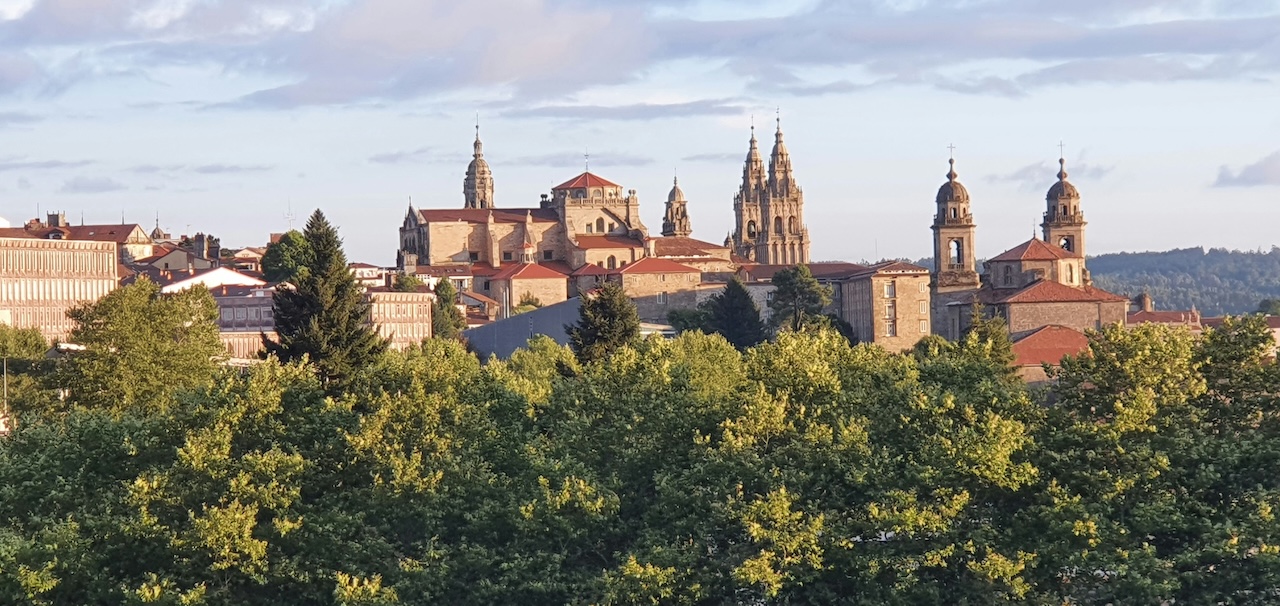



The Camino de Santiago is not a difficult thing to explain and an almost impossible thing to fully describe. In practical terms, it is a network of pilgrimage routes across Europe that converge on the Cathedral of Santiago de Compostela in Galicia, north-western Spain, where the remains of St James are said to rest. In experiential terms, it is something harder to categorise: a physical journey with a philosophical undertow, a social experience structured around strangers who quickly become companions, and a sustained engagement with landscape, culture and the simple business of walking that produces — with remarkable consistency — something that walkers describe as transformative.
For UK travellers, the Camino has a particular appeal. It is a European adventure that requires no specialist mountaineering skills, relatively modest equipment, and can be completed in sections across multiple years without losing continuity of credential or experience. The waymarking across all main routes is excellent, the accommodation infrastructure is well-established, and the community of experienced pilgrims is generous with practical advice to those setting out for the first time. What follows is the practical framework most walkers wish they had read before setting off.
Which Camino Route to Choose and Why
The Camino network encompasses dozens of routes of varying length, difficulty and character, which can make the initial planning decision feel daunting. For UK walkers approaching for the first time, the realistic choice typically narrows to four main options, each with a distinct character.
The Camino Francés — the French Way — is the classic route and the most popular by a considerable margin. It begins in Saint-Jean-Pied-de-Port in the French Pyrenees, crossing the Pyrenean pass on its first day in a stage of genuine drama that sets the tone for everything that follows, and covers approximately 780 kilometres over roughly thirty to thirty-three walking days depending on pace. It passes through Pamplona (the old city and its Roman walls), Burgos (one of the finest Gothic cathedrals in Spain), León (another cathedral of extraordinary quality), O Cebreiro (the Galician mountain pass that marks the final phase of the journey), and the final approach through the ancient oak forests of Galicia to Santiago. Its popularity means it can feel busy in peak season — July and August bring significant numbers — but this is also intrinsic to the experience: the community of pilgrims walking together, the shared evening meals in albergue dining rooms, the conversations along the path, are collectively one of the Camino's defining pleasures.
The Camino Português begins in Lisbon or, more commonly for UK walkers, Porto, and enters Spain at Tui before continuing to Santiago. The coastal variant from Vila do Conde along the Atlantic shore to Caminha offers particularly fine scenery. The Porto route covers approximately 240 kilometres from the city itself and is increasingly popular with first-timers who want a shorter, more accessible introduction. The combination of Porto as a starting city — one of Europe's finest — with the green, granite landscape of northern Portugal and coastal Galicia makes this a genuinely beautiful walk.
The Camino del Norte follows the northern coast of Spain from Irun on the French border, offering dramatic cliff scenery, the cultural pleasures of Basque Country and Cantabrian coastal towns, and considerably fewer pilgrims than the Francés in most sections. It is slightly more demanding underfoot — more elevation change, some rocky coastal paths — but rewards walkers who want a more solitary experience with scenery and a quality of immersion that is distinctive.
The Via de la Plata — the Silver Way — runs north from Seville through Extremadura and Castille, following the line of the Roman road and covering some of the least-visited landscape in Spain. It is one of the longest and most demanding routes, genuinely suited to walkers with significant experience and a particular interest in Roman history; the road surface itself in many sections follows the ancient calzada romana. The spring departure window (March to early May) is well-suited to this route, before the summer heat in the Extremaduran plains becomes prohibitive.
Training, Kit and Physical Preparation
The Camino Francés averages twenty-three to twenty-five kilometres per walking day over its thirty-three-day span. This is achievable for most adults of reasonable fitness, but it requires proper preparation — and the most common reason walkers struggle, slow significantly or abandon the route early is not fitness but footwear.
Boots or shoes must be thoroughly broken in before departure — not broken in on a series of short weekend walks, but worn for three to four months of regular walking, including consecutive long days of fifteen to twenty kilometres. Blisters caused by footwear that has not adapted to the foot, or a foot that has not adapted to the footwear, end more Caminos prematurely than any other physical factor. Well-cushioned trail running shoes have become the dominant choice across most routes for their lighter weight, better heat management and faster drying time after water crossings or rain; waterproof hiking boots are a matter of personal preference and foot shape.
A loaded pack should weigh no more than ten per cent of the walker's body weight, measured with water included. The temptation to over-pack is considerable and the reality of carrying excess weight for eight or more hours daily provides rapid correction. Key items: two to three sets of moisture-wicking base layers, a genuinely waterproof shell jacket (not shower-resistant — Galicia receives significant rainfall), a lightweight sleeping bag liner (most albergues provide blankets but liners add comfort and hygiene), trekking poles (particularly valuable on the Pyrenean crossing and the Galician hill sections), and a well-organised first-aid kit with blister treatment as its primary provision.
Training at home should focus on walking rather than other cardiovascular exercise. Long walks of fifteen to twenty kilometres on consecutive days, ideally with a loaded pack and on varied terrain, prepare the body in a way that cycling or swimming does not. A weekend of thirty kilometres over two days, three months before departure, provides a reliable assessment of readiness.
Booking Accommodation Along the Way
The Camino's accommodation infrastructure is one of its most distinctive features and one of the most practically important to understand before departure. Albergues — pilgrim hostels operated by municipalities, religious organisations and private owners — provide dormitory sleeping, communal facilities and the social environment that is central to the Camino experience. They range from basic municipal facilities with functional dormitories and shared bathrooms to well-appointed private albergues with smaller rooms, better kitchens and a more considered food offering. Monasteries along some routes also offer accommodation, providing an experience with specific historical resonance that many pilgrims value.
A hybrid booking approach works well for UK walkers who want both security and spontaneity. Book the first four or five nights in advance — the sections from Saint-Jean-Pied-de-Port through Pamplona to Logroño are the most pressured for bed availability in peak season — and then allow the rhythm of daily walking to determine where you stop thereafter. This approach respects the Camino's ethos of openness and discovery while providing the confidence of a confirmed first bed.
The Pilgrim Office in Santiago de Compostela issues the Compostela certificate to those who have walked at least the final hundred kilometres on foot, or the final two hundred by bicycle. The Credencial del Peregrino — the pilgrim passport stamped at each albergue, café and church along the route — is the document that evidences eligibility. The Pilgrim Office website provides route information, practical guidance and the online credencial application for UK walkers. The British Pilgrimage Trust provides resources, community connections and inspiration for UK-based pilgrims across multiple route traditions.

Cultural Highlights and Practical Logistics for UK Travellers
The Camino Francés passes through six distinct Spanish regions and spans the full social, architectural and culinary range of northern Spain. The pintxos culture of Basque Pamplona, the Gothic cathedral in Burgos (its interior as impressive as any in France), the Roman aqueduct and the extraordinary cathedral at León, the Galician empanadas and pulpo a la gallega in the final stages — the food narrative alone justifies the attention.
Santiago de Compostela deserves a minimum of two days on arrival. The Pilgrim Mass — celebrated daily in the cathedral and continuous in some form since the twelfth century — carries a weight that is independent of personal religious affiliation; arriving to it after several weeks of walking produces an emotional response that walkers consistently describe as surprising in its intensity. The old city of Santiago — its granite streets, its pazos and arcaded market — is beautiful independently of the pilgrimage context.
UK logistics: most walkers fly to Biarritz or Pamplona for the Francés, or Porto or Lisbon for the Português. Santiago de Compostela Airport has direct flights to London with major carriers, simplifying the return. The full route requires no guide for navigation — the yellow arrow waymarking is near-comprehensive — and can be organised entirely independently.




.svg)